 Ghanatodayonline.com News, Politics, Health, Education & More
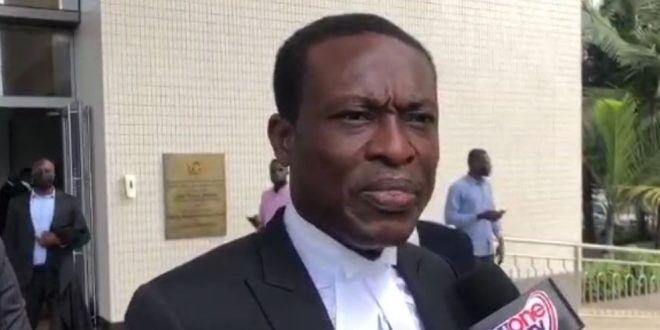
Ghana’s Office of the Special Prosecutor faces increasing pressure as ten distinct petitions call for the ousting of Special Prosecutor Kissi Agyebeng, while critics, including the International Monetary Fund, raise concerns over whether taxpayers are getting sufficient value for the funds provided to the anti-corruption agency.
Last week, government spokesperson Felix Kwakye Ofosu confirmed that the presidency has sent all ten petitions to Chief Justice Paul Baffoe Bonnie for examination. According to the Office of the Special Prosecutor Act of 2017, removal petitions are required to adhere to official processes that include an independent investigation prior to any action being taken.
Parliament sanctioned 146.75 million cedis for the Office of the Special Prosecutor (OSP) in the 2025 budget, allocating 71.75 million cedis specifically for staff remuneration for 249 employees. This equates to an average monthly expense of around 23,075 cedis for each employee, a figure that in some instances surpasses the yearly salary of specific public sector employees.
Even with significant funding, governance experts contend that the office’s results do not align with its resource deployment, intensifying worries about taxpayer worth. The agency obtained more than 95 percent of its approved budget of 149 million cedis in 2024, but critics argue that it has failed to secure a significant high-profile corruption conviction since its establishment in 2018.
A protest in Accra on November 25 was organized by a coalition featuring Apostle Abraham Lincoln Larbi and private lawyer Martin Kpebu, demanding Agyebeng’s dismissal due to an alleged inability to fulfill his responsibilities. The event, centered around “Agro Ne Fom,” concluded with a petition presented to President John Mahama at the Jubilee House.
Kpebu disclosed that a total of fifteen distinct petitions have been submitted requesting the removal of the Special Prosecutor, indicating increasing public discontent. He challenged assertions made by Agyebeng about efforts to obtain help from state agencies to apprehend former finance minister Ken Ofori Atta, contending that these claims have been shown to be untrue.
“He claimed that before Ofori Atta travelled, he saw a letter the former minister wrote to both the outgoing chief of staff and the incoming chief of staff. How do you see such a letter?” Kpebu asked. He added that Agyebeng’s assertions about Immigration and National Security refusing help to arrest Ofori Atta turned out to be false.
The demonstration signifies increasing frustration and doubt regarding the effectiveness of the OSP, coinciding with wider critiques from organizations like the IMF, which pointed out structural flaws such as the lack of a formal charging policy and overlapping responsibilities with other anti-corruption bodies.
A March 2024 IMF Technical Assistance Report highlighted significant issues with Ghana’s anti-corruption framework, indicating that fragmentation, overlapping responsibilities, political interference, and persistent underfunding weaken the efficacy of critical agencies, particularly the OSP. The report characterized the system as “disjointed, redundant, and vulnerable to political pressure.”
The Fund observed that the absence of a formal charging policy leads to inconsistencies in prosecutorial choices and diminishes the quality of corruption cases. In the absence of explicit systems for assessing case readiness, decisions may seem arbitrary, leading to the filing of some cases with insufficient evidence, which weakens court results and diminishes conviction rates.
The IMF report pointed out considerable overlap in mandates between the OSP and other anti-corruption organizations, especially the Commission on Human Rights and Administrative Justice (CHRAJ) and the Economic and Organised Crime Office (EOCO). This replication leads to confusion and legal ambiguity, obscuring which organization should oversee specific corruption issues.
Concurrent inquiries arise from the overlap, leading to wasted costs and disjointed administrative procedures that strain scarce public resources. The IMF urged for well-defined areas of responsibility among CHRAJ, OSP, EOCO, and the Attorney General’s Department to enhance effectiveness.
The report highlighted that the Office of the President holds considerable power over the appointment and removal of leaders in anti-corruption institutions, such as the OSP, potentially jeopardizing their independence. While the Special Prosecutor and Deputy need parliamentary consent, the IMF noted this protection is lacking, as presidents traditionally hold majority control in parliament.
President John Dramani Mahama has referred seven petitions seeking the removal of the Electoral Commission Chairperson, Jean Mensa, and her two deputies, Dr. Bossman Asare and Samuel Tettey, to the Chief Justice, Justice Paul Baffoe-Bonnie, for further review.
The referrals follow Article 70(2) of the 1992 Constitution, which outlines the appointment and removal procedures for heads of constitutional bodies.
Under Article 146, the Chief Justice determines whether a prima facie case exists and, if so, sets up a committee to investigate the allegations. The committee’s findings are forwarded to the President, who is required to act on the recommendations.
Source: Ghanatodayonline.com