 Ghanatodayonline.com News, Politics, Health, Education & More
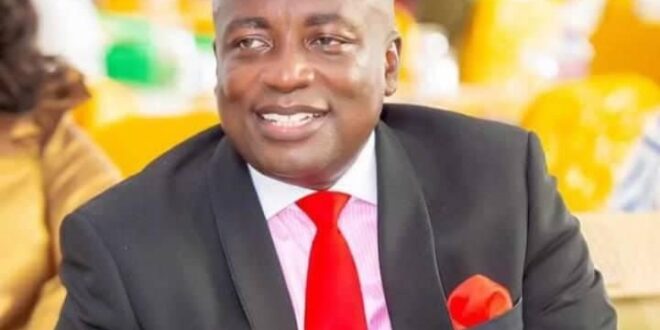
The former General Secretary for the New Patriotic Party (NPP) Ing. Kwabena Agyei Agyepong has condemned President John Dramani Mahama’s February 2026 State of the Nation Address (SONA), labeling it as defensive and deficient in the strong vision required to rebuild confidence in Ghana’s economy.
In a statement released on March 1, 2026, from East Legon, Accra, Agyepong contended that the President lost a constitutional chance to “instill confidence, reshape the national dialogue, and outline a daring plan for Ghana’s economic recovery and development.”
He stated that instead of transcending party divides, the speech was “laden with self-praise and lacking in transformative guidance,” not sufficiently tackling the issues faced by cocoa farmers, investors, and everyday people dealing with increasing electricity prices and economic challenges.
Agyepong conveyed specific worry about what he referred to as the implication that lowering cocoa producer prices was essential to prevent going back to an International Monetary Fund (IMF) programme.
“That argument may satisfy fiscal technocrats, but it does little to comfort the cocoa farmer whose livelihood already hangs in delicate balance,” he said.
He added that cocoa farmers already contend with rising input costs, ageing farms, climate uncertainty and volatile global prices. Shifting the burden of fiscal discipline onto farmers, he argued, reflects “a troubling imbalance in national priorities.”
Read the full statement below:
COCOA FARMERS, MASSES and INVESTORS Left Behind in Mahama’s February 2026 SONA
Over the past week, President John Dramani Mahama had a constitutional opportunity in his 2026 State of the Nation Address to inspire confidence, reengineer the national conversation and articulate a bold roadmap for Ghana’s economic recovery and growth. Instead, Mahama’s address felt more defensive than visionary. It was the usual speech so heavy on partisan self-congratulation and light on transformative direction.
A State of the Nation Address must rise above political applause lines. It must speak to our national realities like the anxieties of our hardworking cocoa farmers, the difficult calculations of investors, and the quiet frustrations of ordinary citizens on the ever rising electricity cost, among others. On that test, this address fell far short.
No mention of Land Reform and imposing a Maintenance Culture
Perhaps the most unsettling aspect of the address was the suggestion that reducing cocoa producer prices was necessary to avoid returning to an IMF programme. That argument may satisfy fiscal technocrats, but it does little to comfort the cocoa farmer whose livelihood already hangs in delicate balance.
It is trite, that cocoa farmers operate within a narrow margin of survival; contending with rising input costs, ageing farms, uncertain climate and volatile global prices. Asking our long suffering cocoa farmers to carry a nation’s burden without a clearly defined long-term productivity strategy reflects a troubling imbalance in national priorities. Fiscal discipline cannot become synonymous with shifting the burden onto those least able to bear it. What good then do farmers derive from state control if they must bear the brunt of bad times?
If agriculture is truly the backbone of the economy, then policy must treat farmers as partners in growth, not as shock absorbers for macroeconomic adjustment.
Equally concerning was the promise of increased taxation at a time when Ghana desperately needs more private capital in infrastructure, manufacturing and technology.
Indeed, taxation is not inherently problematic; irresponsibility is, in our case. Raising taxes without a parallel demonstration of expenditure discipline, regulatory certainty and institutional reform risks dampening investor confidence. Capital flows where policy is predictable and governance is credible. Without those assurances, higher taxes may yield short-term revenue but long-term stagnation.
Investment thrives on clarity and hence President Mahama in the last State of the Nation’s Address, missed a golden opportunity to indicate a comprehensive strategy for broadening the tax base through growth, rather than deepening it through pressure.
More disappointing still, was the absence of a serious assault on the structural weaknesses that continue to undermine Ghana’s democratic and economic architecture.
Indiscipline and corruption within public institutions, cronyism in appointments, selective enforcement of laws, and an uneven application of justice erode public trust. Investors do not merely examine tax rates; they assess the strength of institutions and the predictability of the rule of law. Citizens do not merely listen to government PR spewing out growth statistics; they evaluate fairness. Hence credible reform agenda must confront these issues directly. Silence, however polished, does not amount to reform.
On illegal mining; commonly known as galamsey, the pledges sounded familiar and hollow. Ghana has heard successive administrations promise decisive crackdowns while rivers turn poisonous and farmlands disappear.
This crisis we behold demands more than rhetoric. It requires institutional insulation from political interference, transparent enforcement mechanisms, technological surveillance, and the political courage to confront financiers and enablers at the highest levels.
Without a concrete framework, repeated assurances risk reinforcing public scepticism rather than restoring confidence.
A State of the Nation Address should be distinct from a campaign rally. It is a constitutional moment; a platform to level with citizens about challenges and to articulate a bold, measurable path forward. Ghana needs leadership that is compassionate toward farmers through disciplined fiscal management that is attractive to investors, resolute against environmental destruction, and uncompromising in strengthening institutions.
It is unfortunate President Mahama’s 2026 address did not rise to that standard. And in moments of economic and environmental fragility, presentational leadership is not enough.
Ghanaians deserve more than mere words. We need to see a credible roadmap anchored in reform, fairness and forward thinking.
Ing Kwabena Agyei Agyepong,
1st March 2026.
6 Anang Loop, East Legon, Accra
Source: Ghanatodayonline.com