 Ghanatodayonline.com News, Politics, Health, Education & More
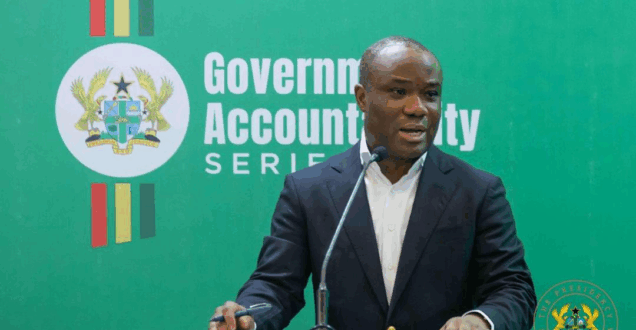
Felix Kwakye Ofosu, the Minister in Charge of Government Communications, has verified that ten petitions submitted against Special Prosecutor Kissi Agyebeng and Jean Mensa, the Chair of the Electoral Commission (EC), along with her two deputies, have been sent to the Chief Justice, Justice Paul Baffoe-Bonnie, for examination.
Addressing the Government Accountability Series in Accra on Wednesday, January 14, Mr. Kwakye Ofosu explained that the President’s involvement concludes after the petitions are sent to the Chief Justice
“Unlike the petitions against the Chief Justice, the President’s mandate in respect of the petitions against the Special Prosecutor and the Electoral Commissioner and her two deputies ends with conveying the petitions to the appropriate quarter, which in this instance is the Chief Justice. That was done a couple of weeks ago,” he said.
“A total of ten petitions were received, seven against the Electoral Commissioner and her two deputies and three against the Special Prosecutor. The President has no role beyond that, and in that regard, we cannot speak to it. The Chief Justice’s office may be in a good position to comment. The President will once again be called to act when the Chief Justice has determined prima facie” he stated.
The petitions, presented by different people and organizations, claim inappropriate behavior. Opponents of the Special Prosecutor point to allegations of incompetence and misuse of authority, whereas the grievances concerning the EC leadership focus on accountability and Commission management.
According to Section 16 of the Office of the Special Prosecutor Act, 2017 (Act 959), any request for the removal of the Special Prosecutor must adhere to a specified legal procedure. The President must send these petitions to the Chief Justice within seven days. The Chief Justice is then given 30 days to decide if a prima facie case has been made.
If a prima facie case is established, the Chief Justice must form a three-member committee to examine the claims and provide its recommendations to the President, who is obligated to respond to the conclusions.
Mr. Agyebeng has held the position of Special Prosecutor since 2021, taking over from Martin Amidu. His time in office has elicited varied responses, with some commending the Office of the Special Prosecutor (OSP) for promoting accountability, while others contend it has occasionally not met expectations.
Certain legal professionals have similarly voiced public criticism regarding elements of the OSP’s activities. Private attorney Martin Kpebu, for example, criticized the OSP.
Source: Ghanatodayonline.com