 Ghanatodayonline.com News, Politics, Health, Education & More
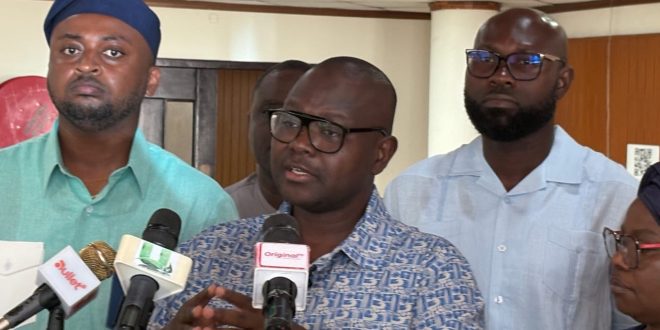
The New Patriotic Party’s (NPP) Ashanti Caucus in Parliament has questioned the government’s financing objectives after the Suame Interchange Project was downgraded. They contend that assertions of debt-related limits are incompatible with spending on road infrastructure more broadly.
During a press briefing on Monday, February 9, 2026, Francis Asenso-Boakye, MP for Bantama and former Minister for Roads and Highways, spoke on behalf of the caucus and questioned why the government was unable to raise money for other significant road projects while the Suame Interchange which was supposed to be a long-term solution to Kumasi’s increasing traffic congestion was being reduced.
“If government could mobilise funds for the Ofankor–Nsawam Road and other major projects, why is the Suame Interchange being short-changed?” he questioned.
The caucus addressed what it referred to as inconsistencies in government policy. They noted that the Suame Interchange was part of the Big Push Road Programme in 2025, aimed at ensuring ongoing financial support for essential infrastructure initiatives.
Mr. Asenso-Boakye mentioned public comments made by the Finance Minister, noting that GHS43 billion has been dedicated to road infrastructure this year, and he raised concerns about why a portion of that budget couldn’t be utilized to finish the Suame Interchange as initially intended.
The MPs condemned the government for focusing on 64 new road initiatives secured via sole sourcing rather than finishing current, impactful infrastructure, stating this hamper economic efficiency and sustainable urban planning.
The caucus states that not finishing the Suame Interchange as scheduled will exacerbate congestion in Kumasi, leading to ongoing productivity declines, increased transportation costs, and worsening mobility in the city.
The Ashanti Caucus urged the government to rethink its funding strategy, reinstate the initial four-tier configuration of the Suame Interchange, and make sure that allocations represent the strategic significance of Kumasi as Ghana’s second-largest city and a key transport center.
“Kumasi deserves infrastructure that meets its scale and significance,” Mr. Asenso-Boakye said. “Short-changing major projects now will cost the city and the nation far more in the long term.”
Source: Ghanatodayonline.com